Sunday, March 1, 2015

No One Wants a P(l)ain Donut...

“’Beautiful!’ She would murmur, nudging Septimus, that he might see. But beauty was behind a pane of glass. Even taste (Rezia liked ices, chocolates, sweet things) had no relish to him.” (87)
This short and simple passage is a complete depiction of Septimus’ perception of his life. Dr. Holmes is only able to understand the transparency of the glass—he can see the things that Rezia finds beautiful, he can eat the “ices, chocolates, sweet things” that Rezia likes, but there will always be something that stops Septimus from perceiving this beauty and from tasting the ices, chocolates, and sweet things. Rezia fell in love with the Septimus of who she thought was gentle and sweet (like ices, chocolates…). However, just like the sweets that graze his taste buds with no effect, Septimus’ marriage with Rezia “had no relish to him”.
 With this passage, I found a parallel between Mrs. Dalloway and “The Death of a Moth”.
“Watching him, it seemed as if a fiber, very thin but pure, of the enormous energy of the world had been thrust into his frail and diminutive body. As often as he crossed the pane, I could fancy that a thread of vital light became visible. He was little or nothing but life.” (The Death of a Moth, 2)

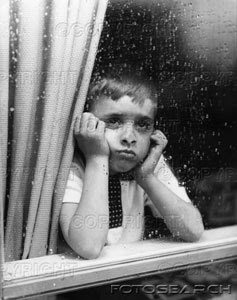
In both of these passages, Woolf uses pane as a pun. Both the pane of glass isolating Septimus and the windowpane trapping the Moth can also be interpreted as the sources of their pain. The transparency taunts them with a life they cannot have. Rezia, Dr. Holmes, and Sir Bradshaw are all ignorant to this barrier between Septimus and his existence. 

Sunday, February 8, 2015

I-dough-lize a nutcase???

Sometimes, good people make bad decisions. Victor’s father from “Because my Father Always Said He Was the Only Indian who Saw Jimi Hendrix Play ‘The Star Spangled Banner’ at Woodstock”, however, just seemed to make a lot of them. Some may conclude that he is just a bad person. After all, he “beat the shit out of [a] National Guard private” (Alexie 25), was always out late at night drinking, would leave his family to ride his motorcycle for days on end, and eventually “left [his wife] to finish raising [their son] all by herself” (Alexie 34). So is Daddy Dearest a bad man or just a good man occasionally bad at being good? Victor’s father’s major flaw was that he is selfish, and we all know the selfishness and being a “family man” don’t mix. It is not that he didn’t love his family, but just that he was ignorant to the consequences that others would have to face for his actions. He was also a hero to his son, as he had many admirable traits. Where he lacked consideration, he thrived in passion and adventure. Victor’s father is not a bad man. He may not be the ideal father…well actually not even the ideal member of society, but there is always something you can learn from anybody.

"Yolo is my motto"

Sunday, February 1, 2015

It's Okay If You Don't Like Donuts

The medical world defines disability as a physical or mental condition that limits someone's movements, senses, or activity. 

As hard as this may be to believe, a human is not complete with just a working body and brain. In other words, the definition of disability is true…if we were all computer programmed robots. What about our emotional health? Mental and Emotional health are not the same (I even googled it); mental health includes cognitive thinking and deductive reasoning. Emotional health, on the other hand, includes the acceptance or control of one’s own emotions. One could be an Olympic gold medalist and have an IQ of 160, perhaps the Guinness world record holder of the fastest vegetable dicer while simultaneously reciting all the digits of pi known to mankind, but if he is not emotionally invested in his desire to live instead of to just exist, that technically makes him disabled too.
We are all hypocrites. People throw around phrases like “be yourself”, “you are special”, or “be unique” without truly believing in it themselves. If you can think to look past someone’s taste in music, fashion sense, mode of expression, or religion, then looking past a disability is no different. Nancy Mairs suggests “that we insert disability daily into our field of vision” (Mairs “Disability”), but I believe there’s more to acceptance that exposure, as not all disabilities are observable. Perhaps introspection at our own emotional setbacks can lead us to become empathetic and understanding of disabilities, whether they be physical, mental, or emotional.


Sunday, December 21, 2014

Travis or a Travesty? (Donut)

Adults are strange. Does it become harder to be happy when you grow up? Even things that I thought would bring a smile to anyone’s face couldn’t even seem to make my family lighten up. Grandmama got sad when she became rich with ten thousand dollars, and Daddy was angry when we found out that we were moving into a house! Only mama reacted normally to the house—I didn’t even get a beating that night! However, mama always seems tired, but tries to hide it. I always hear them yelling in the other room when I’m in the other room. I hope everything will change when we move into the new house that Grandmama bought for us, or maybe I’ll be able to go to a room far enough that I won’t have to hear them yelling. Sometimes daddy gets really drunk, but I still love him. “Sometimes when I tell [mama] that I want to be just like [him]—she says she don’t want me to be like that and sometimes she says she does…” (546) I can tell that mama loves him too, though. I guess that loving is hard as an adult, also. I don’t want to ever grow up if it means that I have to worry and be angry all the time too. 

Sunday, December 14, 2014

"But Money = Donuts = Happiness"

“Money can’t buy happiness”, but it can buy a Fitzgerald novel to teach you why this is so. To say that one did not ever once dream of wealth and luxury is something that everyone knows is false. Even from a young age we dove headfirst into stories about princesses rising from rags to riches, unaware that this is “once upon a time”: a time that cannot exist. The direct correlation of happiness and wealth are as real as pink elephants. A common theme among F. Scott Fitzgerald’s literary works, both Dexter and Gatsby find that their desire to have the image of a perfect life—a big house, money in the bank, and the prettiest girl in the city on their arm—turns out to be their tragic flaw. Fitzgerald uses rhetoric such as color symbolism with white, gold, and green to symbolize wealth and purity; however, each are concentrated with irony that is commonly found among satires. Although Fitzgerald’s famous satires take place in the 20th century, the same flaws in human nature and society are still prominent today. Unlike Moses, who may have been able to part the red sea, society is not as able to part its subconscious flaws.  


Sunday, November 30, 2014

The Do's and the Donut's

 What place does a dream/vision have in one's life/relationships? 

As a part-time angsty teenager, I myself am all too familiar with the pondering of existence and the “meaning of life” as I lie awake in the dark at 2 A.M. on a school night.

“Would I be more successful in my journey if I had more motivation?”

“Would I be more dedicated to the journey if I had a set destination?”

I wish I could say that I’ve got it all figured out, but then what fun would that be? However, I have learned that dreams are powerful, but success is dangerous.

Humans tend to work off of the reward system: if we work hard now, we will be rewarded with economic stability/emotional equilibrium/toys from Santa/etc. So it is the incentive that there is a light at the end of the tunnel that keeps us motivated. Those who know exactly what their light looks like are at an advantage. Their vision of success is no longer an abstract concept, but instead a scenario. Gatsby, with the vision of a life with the wealthy and highly demanded Daisy, is able to build himself up from an irrelevant soldier boy to, eventually, the talk of New York.

However, a touch of success is where it becomes dangerous. Success to us is similar to power. A taste of it is enough to throw one off the edge. Eventually, even those that once upon a time had a vision could end up chasing something that will always be an arm’s length away. How one can find success and not fall into its trap is something I’ll save for another night to ponder about. 


Sunday, November 23, 2014

Santa Baby, Slip a Donut Under the Tree

There is not a specific required age at which Santa is revealed to just be one’s parents on a budget and which the stork is actually the birds and the bees, so when do parents decide that the time is right for kids to come out of their bubble of ignorance to face the harsh realities of the “real world”?
My parents were never the type to celebrate the holidays traditionally. I’ve spent most of my thanksgivings at Chinese restaurants because they’re the only ones still open. It’s not surprising that I also never believed in Santa. In third grade, I asked my mom for a Christmas present, as I was jealous of my classmates, who would always boast about their new toys and gadgets after break. My mother told me that I would have to compose to her an email fully in Chinese of my wish list as a tactic of making me practice my Chinese. The email took a good chunk out of my TV time, so you can imagine my excitement when I woke up that Christmas to see boxes underneath the tree. The label said “From, Santa”, but I was no fool. I've seen that wrapping paper hundreds of times in the hallway closet.

Turns out, my mother had actually just re-wrapped the clothes from my closet that she got me from Gymboree on black Friday. However, that’s not the point. Every time I tell someone that my childhood did not include Santa, they look at me with pitying eyes. What they don’t understand is that just because I didn't live off of the ignorant whims of childhood does not mean that mine was not fulfilling. Childhood is not defined by ignorance. Instead, ignorance is prominent in youth because it is just a product of censorship, a parental instinct to protect one’s child from any means of danger. The history teacher from Billy Collins’ poem “[tries] to protect his students’ innocence,” but he just doesn't understand that the truth of reality can also make his students stronger and more grounded. Santa’s missing presence from my life taught me to work for my rewards, even at a young age.